SAP S/4HANA (SAP Business Suite 4, SAP HANA) is SAP's next-generation ERP platform, built natively on the SAP HANA in-memory database. Unlike SAP ECC, which ran on third-party databases and was designed in a multi-table, aggregation-heavy architecture, S/4HANA simplifies the data model dramatically eliminating redundant tables, reducing data footprint by up to 50%, and enabling real-time analytics alongside transactional processing in a single system.
S/4HANA is not a new skin on an old product. The data model, business logic, and user experience have been rebuilt from the ground up. That is precisely what makes transformation both a significant opportunity and a significant undertaking.
Faster finance with real-time processing
Faster MRP planning in minutes, not hours
A unified source of truth across business functions
Integrated AI through SAP Business AI
A modern, role-based UX via SAP Fiori
Why Transform Now? The Business Case
The urgency is real but the opportunity is bigger than the deadline.
The Deadline Factor SAP has announced the end of mainstream maintenance for SAP ECC by December 2027, with extended maintenance available through 2030 at additional cost. After that, organizations running ECC face unsupported, unpatched systems with escalating security and compliance risk.
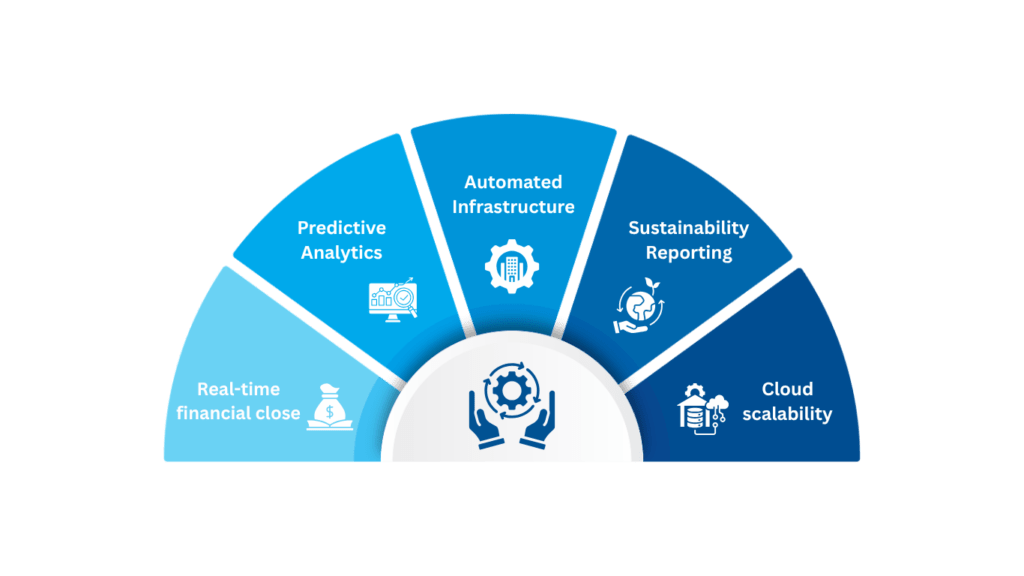
Beyond compliance, SAP S/4HANA delivers strategic value through real-time financial insights, embedded analytics, intelligent automation, and built-in ESG reporting. Its cloud-based architecture supports continuous innovation and scalability.
Organizations that view the transition as a business transformation opportunity can streamline processes, reduce complexity, and unlock greater long-term value.
Assessing Your Migration Path
There is no single migration path to S/4HANA. The right approach depends on your current landscape, data quality, process standardization level, and business appetite for change. The three primary paths are:
Greenfield (New Implementation)
You start fresh. Clean data, standard SAP best-practice processes, minimal customization carried forward. Best for organizations with high levels of technical debt, significant process transformation goals, or those who want to maximize the benefits of S/4HANA's standard functionality.
Best for: Organizations with aging, heavily customized ECC systems; companies undergoing significant M&A or restructuring; businesses targeting a best-practice process model.
Brownfield (System Conversion)
Your existing ECC system is converted in-place to S/4HANA. Configurations, custom code, and historical data are retained. Less disruptive in the short term, but carries legacy complexity forward.
Best for: Organizations with a clean, stable ECC system; businesses needing a faster path to S/4HANA with lower change management risk; those with regulatory requirements around historical data continuity.
Selective Data Transition (Hybrid / Shell Conversion)
A middle path you create a new S/4HANA shell and migrate selective data and processes from ECC. Allows you to clean up legacy data while retaining key historical records and rationalizing the process landscape.
Best for: Organizations with complex, multi-system landscapes; businesses wanting to merge multiple ECC systems into one S/4HANA; those seeking the benefits of greenfield with the continuity of brownfield.
The Five Phases of an S/4HANA Transformation
A well-run S/4HANA transformation follows a structured program lifecycle. While methodologies vary (SAP Activate is the recommended framework for S/4HANA), most programs move through five distinct phases:
Phase 1 : Discover & Assess
Define the business case, assess current system landscape, run a custom code impact analysis, and select your migration path and deployment model. Outputs: Business case, scope definition, high-level roadmap, deployment decision.
Phase 2 : Prepare & Design
Establish the program structure, stand up the project team, complete the solution design (Fit-to-Standard or Fit-Gap workshops), and finalize the technical architecture. Outputs: Functional specifications, technical design, data migration strategy, integration blueprint.
Phase 3 : Build & Configure
Configure the S/4HANA system to the agreed design, develop custom extensions (keeping them clean and cloud-ready), build integrations, and begin data migration preparation cleansing, mapping, and mock loads. Outputs: Configured system, integration connections, initial data migration runs, unit-tested developments.
Phase 4 : Test & Train
Execute structured testing cycles unit testing, string testing, user acceptance testing (UAT), and performance testing. Run end-user training programs, complete cutover planning, and finalize hypercare support models. Outputs: Signed-off test results, trained user base, cutover plan, go/no-go decision criteria.
Phase 5 : Deploy & Hypercare
Execute the production cutover freeze the legacy system, migrate final data loads, and go live. Hypercare is the critical first 4–8 weeks post-go-live, with elevated support, monitoring, and rapid issue resolution. Outputs: Live S/4HANA system, stabilized operations, lessons learned documentation.
Key Workstreams and Stakeholders
A successful S/4HANA transformation is a cross-functional program, not just an IT project. Key workstreams include:
Basis, security, SAP BTP, middleware (API Management / Integration Suite)
Data Management
Master data governance, data migration, data quality
Change Management & Training
Communication, stakeholder engagement, user readiness
Cutover & Hypercare
Technical cutover, business continuity, post-go-live support
Executive sponsorship is non-negotiable. Programs that lack C-suite commitment particularly CFO and COO alignment face significantly higher risk of scope creep, decision gridlock, and schedule delays.
Common Pitfalls and How to Avoid Them
A well-run S/4HANA transformation follows a structured program lifecycle. While methodologies vary (SAP Activate is the recommended framework for S/4HANA), most programs move through five distinct phases:
Manufacturing : Production planning, shop floor integration
Life After Go-Live Sustaining the Value
Adopt SAP's release cycle
Cloud deployments introduce new features every quarter. Establish a process to assess, test, and enable innovations.
Extend with
SAP BTP
SAP Business Technology Platform enables extensions,
AI applications without compromising the core.
Embed analytics into processes.
Embed analytics into processes for faster, smarter decisions.
Turn operations into opportunities for insight and growth.
Govern your master data
Establish post-go-live data governance with data stewards and quality standards to maintain system integrity.
Build an
internal CoE.
Establish a dedicated SAP CoE to sustain knowledge, manage releases, & drive continuous business improvement.
Measuring Success KPIs That Matter
Transformation value must be measured, not assumed. Define your baseline metrics before go-live and track outcomes post-deployment:
Business cases built on realistic, measurable outcomes, not just cost reduction are far more likely to sustain executive support through the inevitable program challenges.
Business Area
Example KPIs
Finance
Supply Chain
Procurement
Manufacturing
IT Operations
User Adoption
Month-end close cycle time, reconciliation effort, financial reporting speed
Inventory turnover, order fulfillment rate, MRP runtime
PO cycle time, supplier payment accuracy, contract compliance rate
OEE (Overall Equipment Effectiveness), production schedule adherence
System downtime, number of interfaces, total cost of ownership
System login rates, support ticket volume, training completion rates